
“Every morning, another handful of hair on the floor. Every mirror, a reminder of what’s slipping away…”
If this sounds familiar, you’re not alone.
Hair loss in men is far more common than most realise — and it doesn’t wait for old age. Many men in their 20s and 30s start noticing thinning patches, a receding hairline, or simply less volume than before. The good news? You don’t have to accept it. Today, PRP hair loss treatment is one of the most clinically proven, non-surgical solutions available — and at Lover Clinic, we’ve helped hundreds of men get their hair and confidence back.
This guide was written by the specialist medical team at Lover Clinic to help you understand what causes hair loss, how PRP works, and whether it’s the right treatment for you.
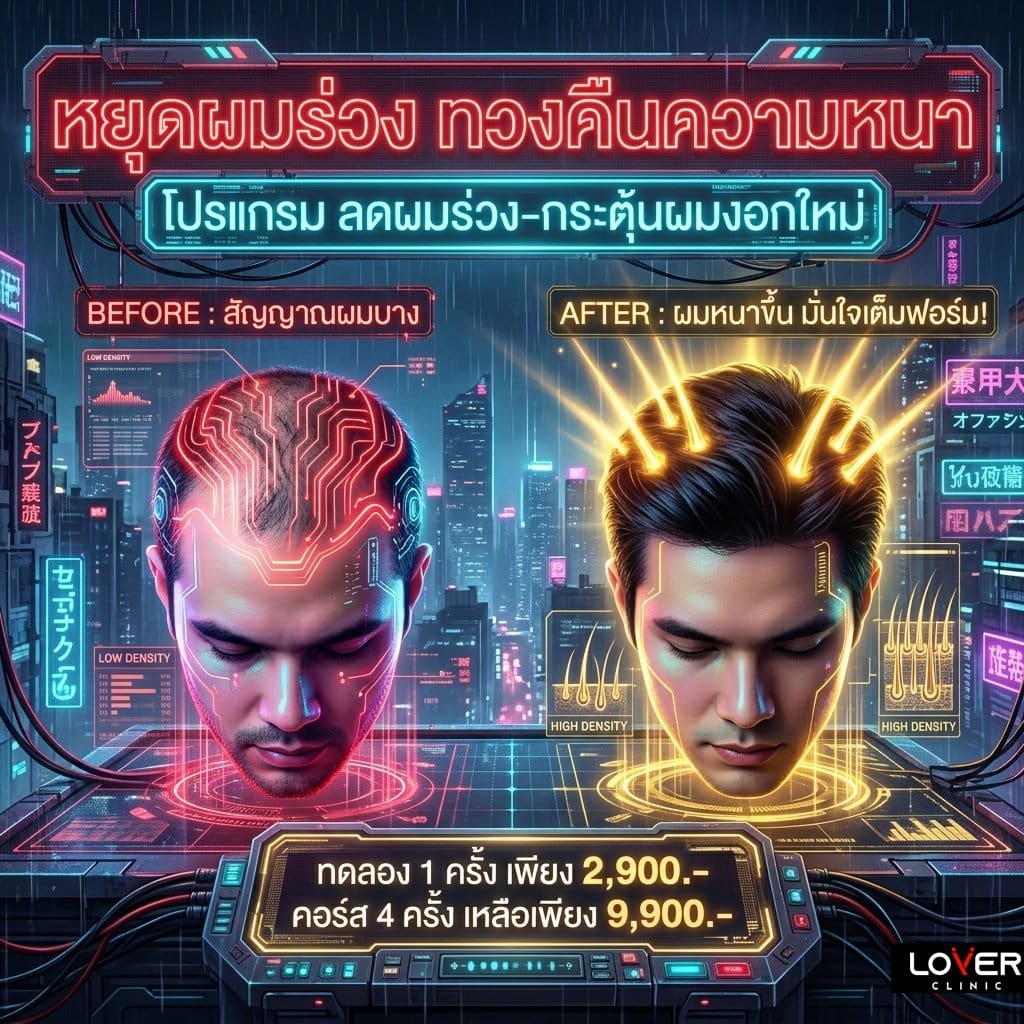
Why Are You Losing Hair in Your 20s and 30s? It’s Not Just Genetics
1. DHT Hormone — The Main Culprit Most Men Don’t Know About
Dihydrotestosterone (DHT) is a byproduct of testosterone, produced when the enzyme 5-alpha reductase converts testosterone into DHT.
When DHT levels are elevated, it binds to hair follicles on the scalp, gradually shrinking them until they stop producing hair altogether. This is the primary cause of Androgenetic Alopecia (male pattern baldness) — affecting up to 50% of men by the age of 50, with early signs sometimes appearing as young as 20.
Wondering whether your hormone levels may be contributing to hair loss? Explore → Testosterone Replacement Therapy
2. Chronic Stress — The Silent Killer of Hair Follicles
Ongoing stress triggers elevated cortisol levels, which disrupts the natural hair growth cycle. This pushes hair follicles prematurely into the resting phase (Telogen Phase), causing sudden, widespread shedding — a condition known as Telogen Effluvium.
If you’ve been through an intense work period, sleep deprivation, or a major life event, your hair may be paying the price.
3. Nutritional Deficiencies — The Root Cause You’re Overlooking
Hair follicles need specific nutrients to function. Key deficiencies that contribute to hair loss include:
- Iron — critical for oxygen delivery to follicles
- Zinc — essential for protein synthesis and follicle structure
- Biotin (Vitamin B7) — supports keratin production
- Vitamin D — activates dormant follicle receptors
Want to restore essential nutrients quickly? Learn more → IV Drip Therapy
4. Medications and Underlying Health Conditions
Certain medications — including acne treatments (Isotretinoin), blood pressure drugs, and some antifungals — as well as thyroid disorders, can trigger or accelerate hair loss.
Warning Signs You Should Never Ignore
Seek medical advice as soon as you notice these signs — early intervention gives far better results:
- Losing more than 100 hairs per day (normal is 50–100)
- Noticeably thinner ponytail or reduced hair volume
- Increasingly visible scalp, especially at the crown
- A receding hairline at the temples or forehead
- Hair that feels brittle, breaks easily, or lacks body
What Is PRP Hair Loss Treatment and Why Does It Actually Work?
Understanding PRP (Platelet-Rich Plasma)
PRP hair loss treatment is a clinically backed, non-surgical procedure that uses your own blood to stimulate natural hair regrowth. Here’s how it works:
A small blood sample is taken and placed in a centrifuge, which spins it to separate the plasma layer richest in platelets (Platelet-Rich Plasma). This concentrated PRP is then precisely injected into the thinning areas of your scalp.
Platelets in PRP release powerful Growth Factors that:
- Reactivate dormant hair follicles
- Increase blood circulation to the scalp
- Extend the Anagen (active growth) phase of hair follicles
- Reduce scalp inflammation that contributes to follicle damage
According to a review published in Frontiers in Medicine, PRP leverages growth factors including EGF, IGF-1, and VEGF — all of which individually play important roles in regulating hair follicle growth.
How Does PRP Compare to Other Hair Loss Treatments?
| Treatment | External Chemicals | Side Effects | Visible Results |
|---|---|---|---|
| PRP hair loss treatment | None (uses own blood) | Minimal | 3–6 months |
| Minoxidil | Yes | Irritation, unwanted body hair | 3–6 months |
| Finasteride | Yes | Hormonal effects, sexual dysfunction | 6–12 months |
| Hair Transplant | Surgery required | Long recovery | 12+ months |
PRP is best suited for: Men in the early to mid stages of hair loss who want natural-looking results without surgery, medications, or lengthy recovery.
What Does the PRP Hair Loss Treatment Process Look Like at Lover Clinic?
Step 1 — Specialist Diagnosis and Assessment
Before any treatment begins, our doctor will:
- Review your full medical history and lifestyle habits
- Examine your scalp using specialist trichoscopy equipment
- Map hair density across different scalp zones
- Identify the root cause — whether DHT, hormones, nutrition, stress, or a combination
No guesswork. Every treatment plan is built around your specific condition.
Step 2 — PRP Preparation from Your Own Blood
- A small blood draw of approximately 10–20 ml
- Centrifuge processing to isolate the Platelet-Rich Plasma
- Concentrated PRP prepared and ready for injection
Step 3 — PRP Injected into the Scalp
The PRP is carefully injected into thinning zones of the scalp. The procedure takes approximately 20–30 minutes. Most patients experience only mild tingling or discomfort — and there is zero downtime. You can return to work the same day.
Step 4 — Follow-Up and Ongoing Monitoring
Your doctor will schedule follow-up appointments every 4–6 weeks to assess progress and fine-tune the treatment plan as needed.
What Results Can You Expect from PRP Hair Loss Treatment?
Month-by-Month Timeline
Months 1–2: Reduced shedding. Scalp feels healthier with improved circulation.
Months 3–4: New hair growth becomes visible in previously thinning areas.
Months 5–6: Noticeably thicker, denser hair. Confidence restored.
💡 Clinical Evidence: A meta-analysis published in Aesthetic Plastic Surgery (2024) found that PRP hair loss treatment significantly increases hair density in male patients with Androgenetic Alopecia, with hair density in the PRP group significantly higher than the control group after consistent sessions. A randomised placebo-controlled trial published on PubMed further confirmed a mean increase of 45.9 hairs per cm² compared to baseline values with no side effects noted.
PRP Hair Loss Treatment Programme at Lover Clinic — Complete Care in One Place
At Lover Clinic, PRP is just one part of a comprehensive hair health programme designed specifically for men:
Our Anti Hair Loss Programme Includes
✅ Root Cause Diagnosis — targeted treatment, not guesswork
✅ PRP Hair Loss Treatment — stimulates regrowth using your own Growth Factors
✅ Anti Hairloss Programme — deep scalp nourishment and conditioning
✅ Nutrition and Lifestyle Guidance — support hair health from the inside out
View the full service details → Hair Loss Treatment Service
Flexible Treatment Packages
Our team will recommend the right number of sessions based on your individual assessment. Whether you’re looking to trial the treatment or commit to a full course, we’ll guide you to the option that best fits your needs and goals.
Ready to find out what’s right for you? → Book a Free Consultation
Why Choose Lover Clinic for PRP Hair Loss Treatment?
Lover Clinic is a dedicated men’s health clinic built around one purpose: solving men’s health concerns with expertise, discretion, and real results.
- 👨⚕️ Specialist doctors with direct experience in PRP hair loss treatment
- 🔬 Medical-grade technology — certified safe and effective
- 🎯 Precise diagnosis first — we treat the cause, not just the symptom
- 🔒 Complete confidentiality — designed entirely around male patients
- ⭐ Proven outcomes — trusted by hundreds of men across Thailand
“After 3 months of treatment, I started seeing real results. My hair came back thicker and healthier. The doctors here are genuinely knowledgeable and professional.” — Real patient, Lover Clinic
Frequently Asked Questions About PRP Hair Loss Treatment
Is PRP hair loss treatment painful?
Most patients feel only mild stinging during the injections. A numbing cream can be applied beforehand for extra comfort. Overall, the procedure is very well tolerated — and with zero downtime, you can head straight back to your day.
How many PRP sessions are needed to see results?
A minimum of 3–4 sessions spaced 4–6 weeks apart is recommended for sustained follicle stimulation and visible, long-lasting results.
How much does PRP hair loss treatment cost?
Treatment costs vary depending on the number of sessions recommended and your individual condition. Contact our team for a personalised quote after your initial consultation.
Does PRP hair loss treatment work for all types of hair loss?
PRP delivers the best results for Androgenetic Alopecia (male pattern baldness) and Telogen Effluvium (stress-related shedding). The earlier treatment begins — while follicles are still active — the better the outcome.
What is the difference between PRP and a hair transplant?
A hair transplant is a surgical procedure that physically relocates follicles — suitable when follicles are already permanently lost. PRP hair loss treatment is a non-surgical option ideal for men in earlier stages of loss, offering natural results at a fraction of the cost and recovery time.
What aftercare is required following PRP treatment?
- Avoid washing your hair and intense exercise for the first 24 hours
- Protect your scalp from direct sun exposure
- Stay well hydrated and get adequate sleep
- Follow all post-treatment guidance provided by your doctor
Conclusion — PRP Hair Loss Treatment Is the Answer You’ve Been Looking For
Thinning hair doesn’t have to be your story. With PRP hair loss treatment and our comprehensive men’s hair health programme at Lover Clinic, you can stop the shedding, stimulate real regrowth, and walk back into the world with your confidence fully restored.
The single most important thing to remember: don’t wait until follicles are gone for good. The earlier you start PRP hair loss treatment, the better your results will be.
Ready to take the first step? → Book a Consultation at Lover Clinic